What if your investment didn’t need another job from you?
The difference between owning a holiday home and managing one.
There is a curious contradiction in the way we think about property investment. We often acquire assets with the intention of creating greater financial freedom, yet some of those assets end up demanding a surprising amount of our time. A holiday home is a particularly good example. On paper, the idea is attractive: a desirable property in a destination people want to visit, with the potential to generate rental income. In practice, however, someone still needs to manage reservations, communicate with guests, organize cleaning, coordinate maintenance, and deal with the occasional unexpected problem.
None of these responsibilities is particularly unusual, and experienced property investors will be familiar with them. What is worth considering is how easily they can turn an investment into another business that requires active management. For someone who enjoys running short-term rentals, this may be part of the appeal. For someone whose professional life is already demanding, the calculation can look rather different. The question is no longer simply whether a property can generate income, but how much personal involvement that income requires.
The hospitality industry has always depended on work that happens behind the scenes. Guests rarely think about the coordination involved in preparing a property for their arrival, maintaining consistent standards or ensuring that everything runs smoothly throughout their stay. Nor should they have to. Yet for an independent holiday homeowner, these responsibilities can become a regular part of everyday life. Even when individual services are outsourced, someone still needs to oversee the process, make decisions and ensure that the different pieces work together.
This is where the distinction between owning a holiday home and operating one becomes particularly relevant.
When ownership doesn’t mean running the business
Professional property management is hardly a new idea. Investors have long relied on specialized operators to manage commercial buildings, residential portfolios and other income-generating assets. The principle is straightforward: ownership and daily operations are different responsibilities, and they do not necessarily need to be carried out by the same person. In the holiday rental market, this distinction becomes especially interesting because hospitality is a demanding business. Unlike a conventional long-term rental, a holiday property may welcome a succession of guests, each with their own expectations, questions and practical needs. Its performance depends not only on the property itself, but also on how it is marketed, maintained and managed over time.
A professionally managed resort offers a different approach to this challenge. Rather than expecting individual owners to build and coordinate their own rental operations, the management structure is established around the destination itself. Marketing, reservations, guest communication, housekeeping and operational coordination become part of a wider system designed to support the resort’s day-to-day functioning.
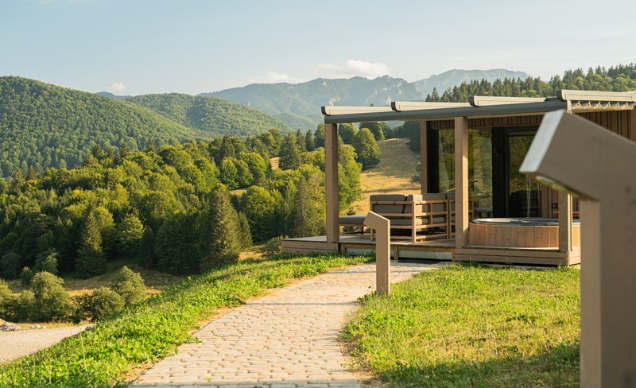
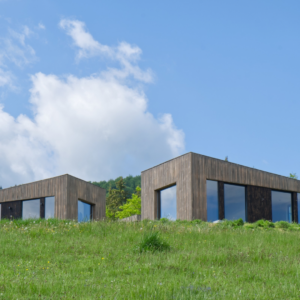
At The Valley Resort, this approach is central to the ownership concept. The Romantic and Infinity Holiday Homes are privately owned properties within an all-season mountain resort, with rental operations handled through a professional management structure. Owners are not expected to personally organize guest arrivals, manage booking platforms, or arrange cleaning between stays. These responsibilities are handled by the teams operating the resort, allowing owners to remain involved at an ownership level rather than becoming responsible for the daily hospitality business.
This does not mean that property ownership becomes entirely passive. There are still financial considerations, operating costs, contractual arrangements and investment risks to understand. What it can do is reduce the amount of direct operational involvement required from the owner, which is an important distinction for investors who already have other professional commitments.
The value of an investment is not measured in money alone
Time is an interesting part of the investment equation because it is rarely presented alongside the more familiar financial indicators. Purchase price, projected income and operating expenses are relatively easy to compare. The personal attention required to manage an asset is less straightforward to quantify, even though it can influence how attractive an investment feels in practice.
Two properties with similar financial characteristics may offer very different ownership experiences. One might require its owner to make frequent decisions, coordinate suppliers and remain available when something goes wrong. The other might operate within an established management structure, with defined responsibilities and professional teams handling the daily work. The financial comparison remains essential, but it does not tell the entire story.
This is also why the idea of passive income deserves a little more nuance than it usually receives. It is an appealing expression, but one that can create unrealistic expectations if taken too literally. Income-producing investments are rarely free of responsibilities or risk. The more useful question is how those responsibilities are distributed; how transparent the operating model is, and how much personal involvement the owner can reasonably expect.
For some investors, active property management is enjoyable and rewarding. For others, the ability to own a rental property without personally operating it is an important part of the attraction. Neither preference is inherently better; they simply reflect different priorities.
The Valley Resort has been developed with the latter perspective in mind. Its holiday homes form part of a coordinated destination, supported by a shared identity, resort services and professional rental management. The individual property remains an important part of the investment, but so does the structure surrounding it. The way a destination is operated, presented to guests and maintained over time matters when considering the experience of ownership.
As The Valley Resort approaches its opening, this distinction is becoming increasingly tangible. The focus is not only on completing the holiday homes, but also on preparing the wider environment and operational systems that will support the guest experience. For future owners, these elements are relevant because they help define what owning a property within The Valley Resort will involve.
There is also a timely consideration for those currently exploring the opportunity. A limited number of holiday homes remain available, and a new pricing phase is planned to begin in January 2027. Prospective buyers therefore have an opportunity to review the properties available under the current pricing structure, learn more about the management model and evaluate whether the concept aligns with their investment objectives.
Ultimately, a property investment should be assessed on its financial fundamentals, its risks and its suitability for the individual investor. But there is another question worth including in that assessment: how much of your time will it ask for?
After all, the purpose of building an investment portfolio is not necessarily to build yourself a longer working week.
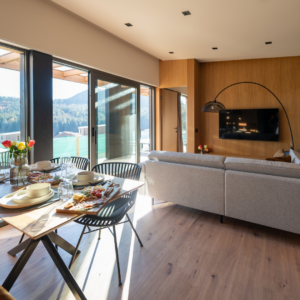
Discover the ownership opportunities at The Valley Resort.
Contact our sales team to learn more about the available Romantic and Infinity Holiday Homes, and the professional rental management model.
-
 September 24, 2026🕑 4 minThe Valley Diaries #10: Before the first morning
-
July 16, 2026🕑 4 minThe Valley Diaries #9: When does a destination come to life?
-
June 9, 2026🕑 4 minVama Buzăului is gaining international attention. The Valley Resort is already part of that story.
-
May 13, 2026🕑 4 minThe Valley Diaries #8: April Takes Root at The Valley
-
April 22, 2026🕑 4 minWhat makes a holiday home easier to position as an investment?
-
March 31, 2026🕑 4 minThe Valley Diaries #7: Early Spring at The Valley